Teak is one of the easiest woods to live with in the tropics, but easy is not the same as no care at all. Bali throws three things at furniture: humidity that swings between monsoon damp and air conditioned dry, strong sun, and the occasional insect. Here is a simple routine that deals with all three.
The routine at a glance
| How often | What to do |
|---|---|
| Daily | Wipe spills straight away with a damp cloth, then dry |
| Weekly | Dust, and brush the rattan weave with a soft brush |
| Every 3 months | Wash with mild soap and water, check that joints are tight |
| Every 6 to 12 months | Refresh oiled indoor teak with teak oil |
| Once a year | Clean and reseal outdoor teak |
Everyday cleaning
A soft cloth wrung out in warm water removes most marks. For greasy spots, add a drop of mild dish soap, then wipe again with clean water and dry. Skip all purpose sprays with bleach or ammonia, which strip oil from the surface and leave pale patches. Skip silicone furniture polish too. It builds a film that makes later oiling patchy.
Humidity and air conditioning
This is the part of tropical care most people never think about. Wood takes on and gives off moisture until it matches the air around it. In Bali's outdoor air that often means a moisture content in the mid teens. In an air conditioned bedroom it can drop to around 9 or 10 percent. Every swing makes the wood shrink or swell a little.
Teak handles this better than almost any other wood, but you can help it:
- Keep furniture out of the direct blast of an air conditioning unit.
- Do not move a piece back and forth between a closed, cooled room and an open terrace.
- Leave a few centimetres between cabinets and walls so air can circulate.
Our engineer's article on moisture content explains the numbers behind this.
Oiling indoor teak
Oiled teak looks richer and resists stains better. To refresh it, clean and dry the surface, apply a thin coat of teak oil with a lint free cloth along the grain, wait about fifteen minutes and then wipe off everything that has not soaked in. Leftover oil turns sticky and collects dust. Two thin coats are better than one thick one.
Throw away oily rags flat and outside, or soak them in water first. Rags soaked in drying oils can heat up and catch fire if they are left crumpled in a pile.
Outdoor teak
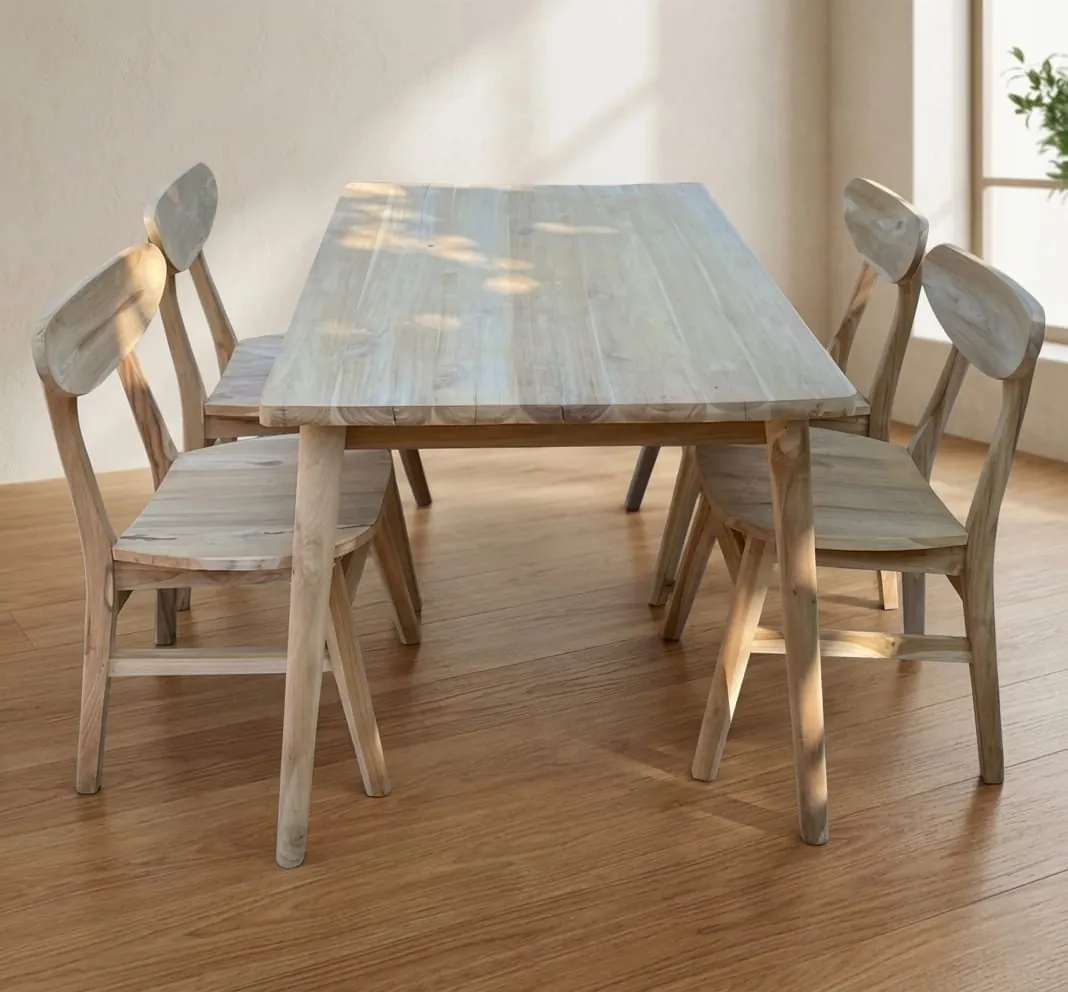
Untreated teak outdoors slowly turns silver grey. That is a surface change, not rot, and many people love it. If you prefer the honey colour, clean the furniture and apply an outdoor teak sealer once a year. Oil alone is a poor choice outdoors, because in warm, damp air it can feed mildew. Why teak turns grey covers the restoration process step by step.
Water rings, mould and other problems
- White water rings sit in the finish, not the wood. Rub gently with a little teak oil on a cloth. If they persist, a very light sanding with fine paper and a fresh coat of oil removes them.
- Black spots or mildew grow where air does not move. Wash with mild soap, dry in the shade, and improve ventilation around the piece.
- Small cracks at the ends of a table top usually mean the wood is drying out. Keep it away from the air conditioner and oil the end grain.
- Fine powder or tiny holes can mean insects. Teak heartwood resists termites better than most woods, but no wood is immune. Contact us or a pest specialist quickly.
Sun
Direct sun bleaches oiled teak unevenly. If a table stands by a big window, rotate it now and then, or use a runner, so it ages evenly.
Rattan and cane parts
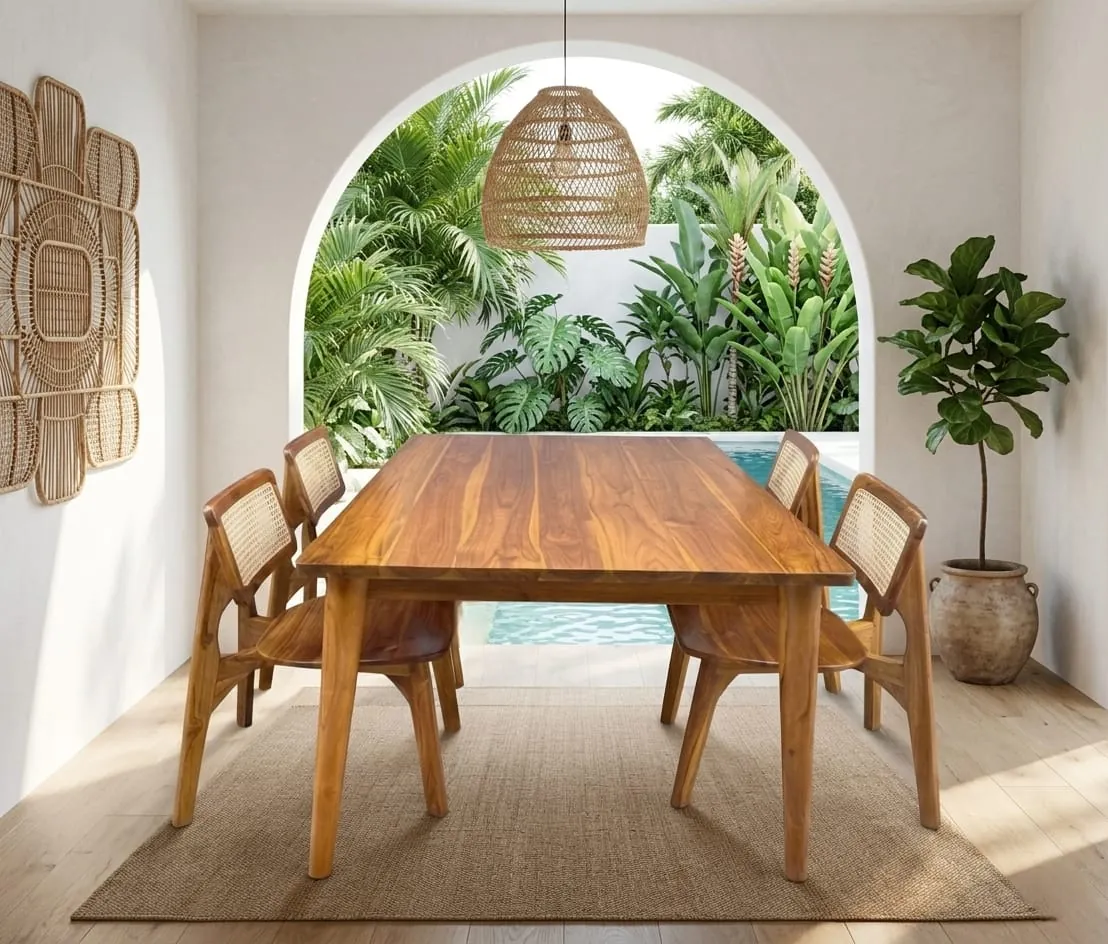
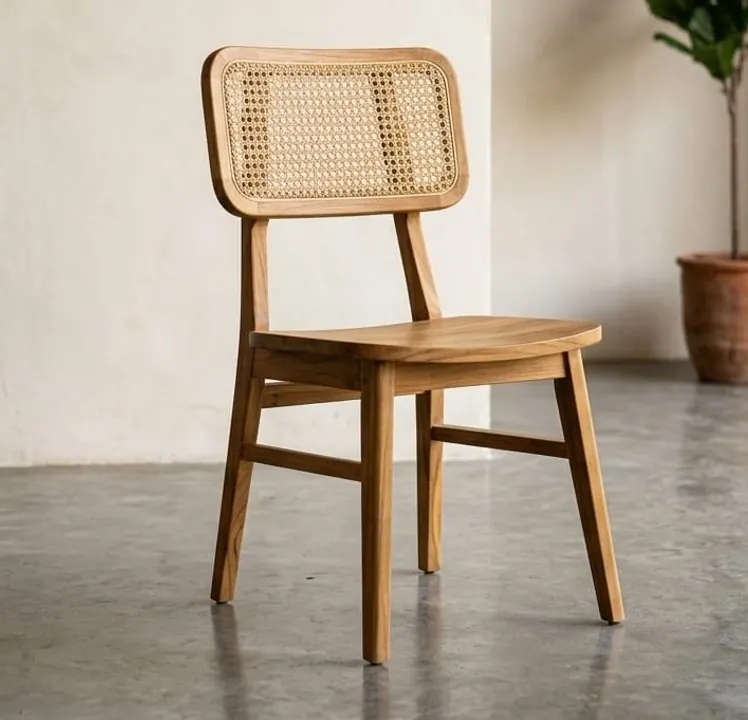
Many of our pieces combine teak with woven rattan cane. Cane needs its own routine: brush it, keep it out of rain, and tighten a sagging seat with a little water on the underside. The full method is in our rattan cane care guide.
When to ask for help
A wobbling chair, a drawer that suddenly sticks, or a crack that grows over a few weeks is worth a photo on WhatsApp. Small problems are easy to fix early and expensive to fix late.

Albert Meigo founded Bali Teak House. He trained as an aerospace engineer at Institut Teknologi Bandung and works with simulations of heat, moisture and structural loads, which is why these guides talk about moisture content and joints, not only looks.